
Alive on Chain: A Survey of Recent Art Where the Medium Is the Work
From bytecode to token standards, a wave of recent Ethereum projects treats the chain’s own components as creative material.
More than archival
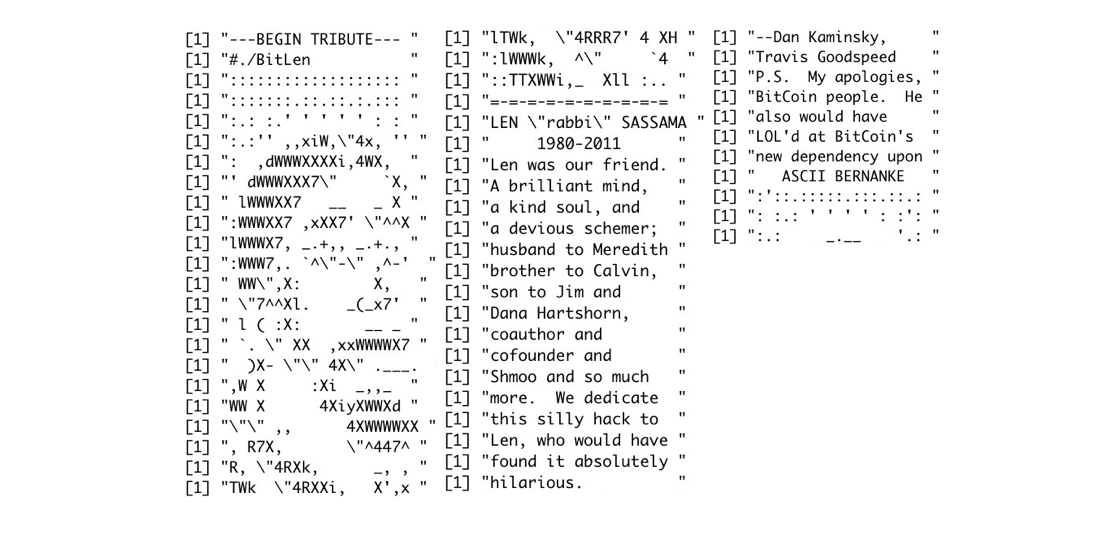
The practice of putting art on a blockchain is almost as old as blockchains themselves. It arguably begins with a 2011 memorial inscription written into the data of a Bitcoin transaction.¹
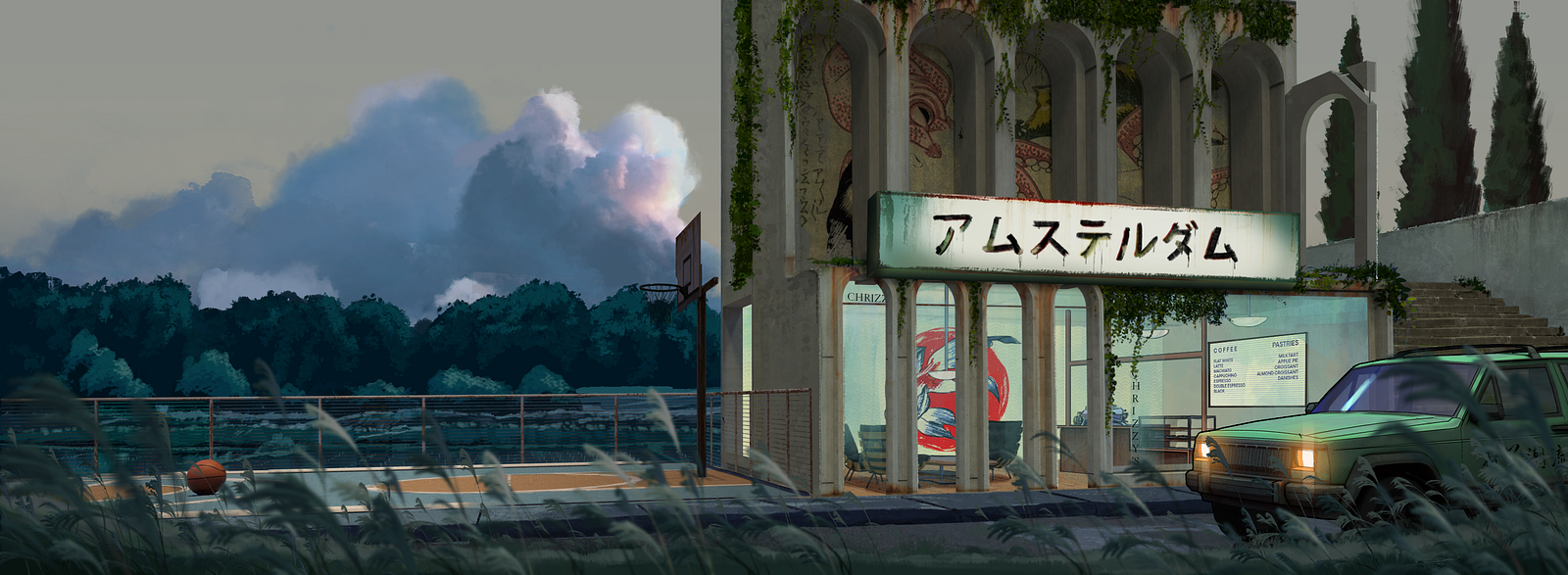
The intuition behind this gesture is importantly archival: A work that lives on chain is harder to censor, take down, or quietly delete when a hosting website shuts down. A few weeks ago, NFT collectors were reminded of this when art platform Foundation was taken offline.²
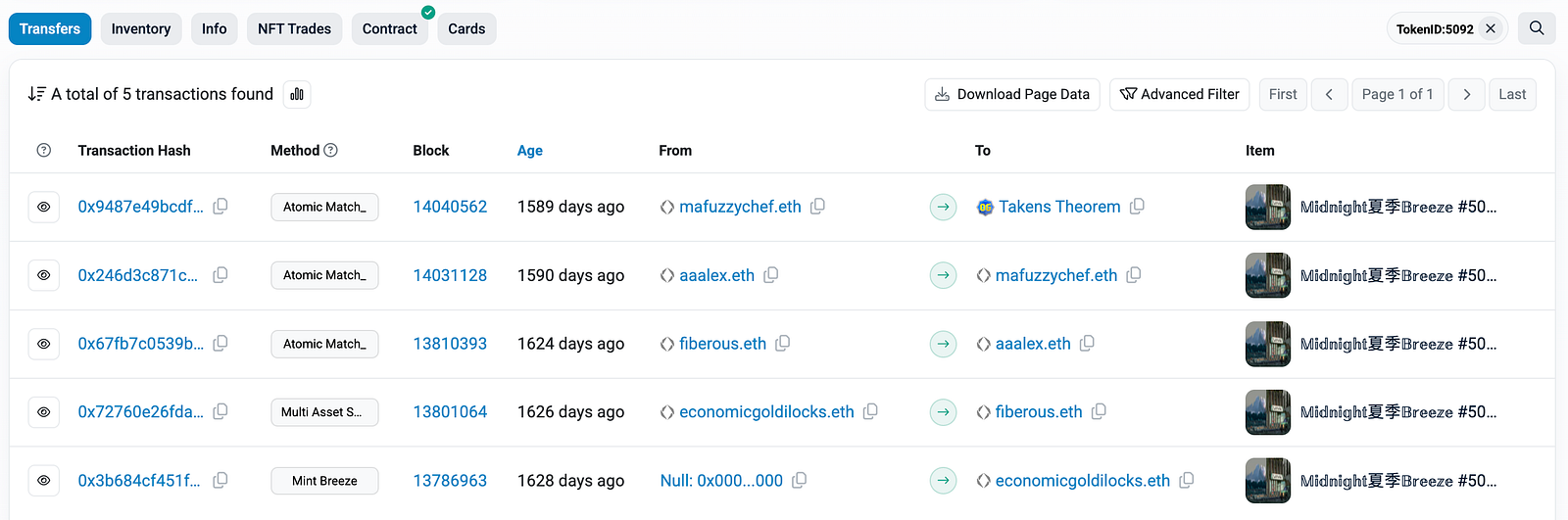
Blockchain can have powerful archival properties to protect against such platform closures including as a record of provenance: The ledger records current and prior ownership. For example, Etherscan provides a precise record of NFT transfers for individual tokens. You can inspect who owns an NFT now and how ownership changed in the past:
Archive and provenance are critical, but a programmable ledger does more than this — it also offers artists a conceptual substrate for creative experimentation. Through blockchain, creators can define, program, and explore new forms of expression, enabling actions, interactions, coordination, computation, and more.
These affordances permit blockchain to serve as the medium and as the artwork itself,³ creating new expressive opportunities that have cascaded recently into many innovative and interesting artworks. Before getting to this recent work, first, some history.
Blockchain as conceptual substrate
A handful of conceptual artists were early adopters, using blockchain as a source of inspiration. Consider two notable examples who illustrate its expressive potential.
Rhea Myers’s Is Art (2014) is a contract whose state can be toggled between “is art” and “is not art.” There is no image. The work is the public, on-chain state of nomination. Its status as art is not the visual form but rather subject to the whims of contract interactions. Rhea’s contract implements art (or not art) as “dematerialization and nomination.”
A few years later, Mitchell F. Chan’s Digital Zones of Immaterial Pictorial Sensibility (2017, as an ERC-20) recasts classic concept art and proposes that tokenization is a process that creates an immateriality: The token is not the visual artwork, it is a pointer, a promise of future exchange.
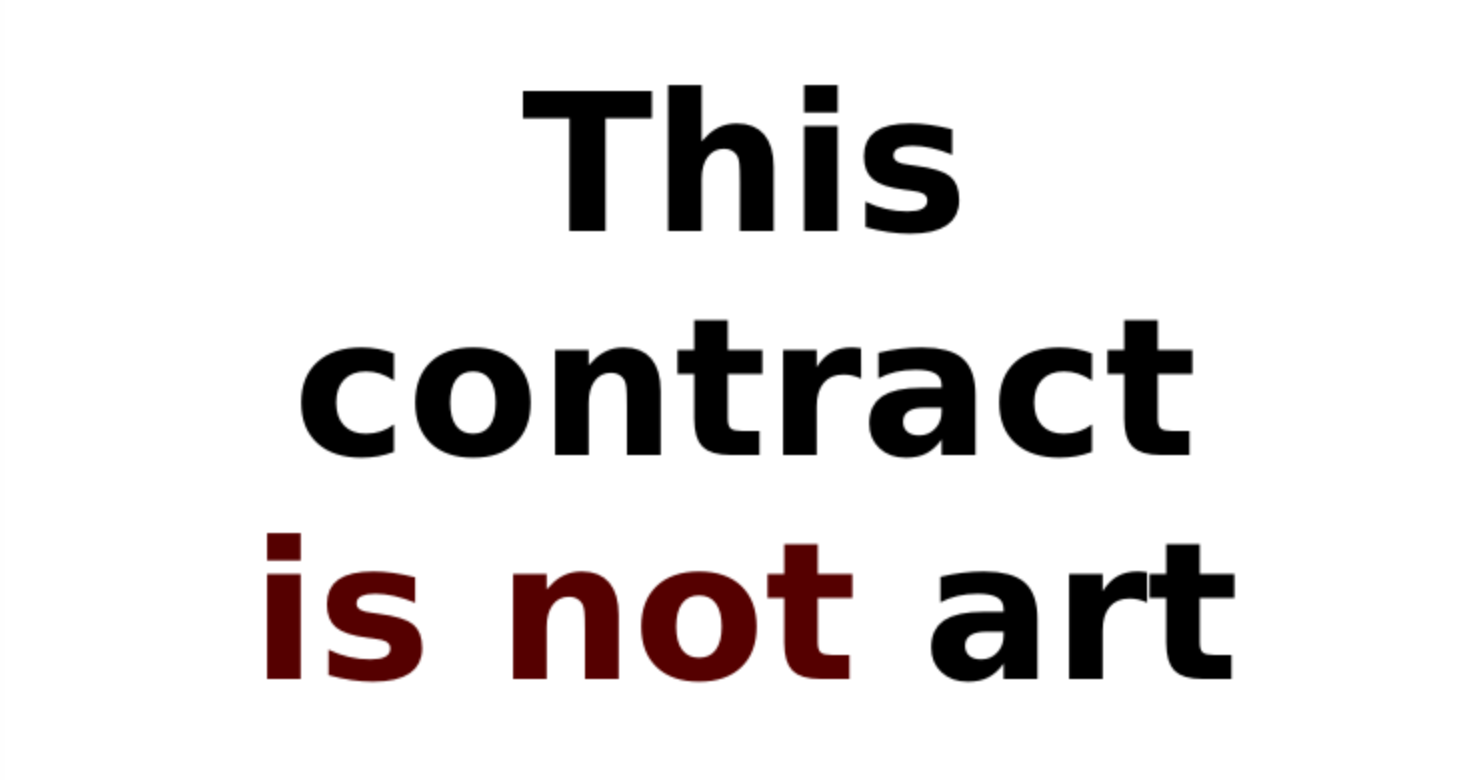
Myers and Chan set a new creative tone around blockchain.⁴ Both continue to create new works that have explored relation, reality, and meaning and tendencies of cryptoeconomics and more.
In the years since, there has been an explosion of projects similarly inspired. There are so many great examples and not enough space to share them all. They would include Simon de la Rouviere’s Neolastics, a financial bonding curve blended into neoplastic on-chain art. A history would also include playful, social, and generative mechanisms of Avastars, Squiggly, Mooncats, Blitmap, SALT, Nouns, Moon in Motion and many more.
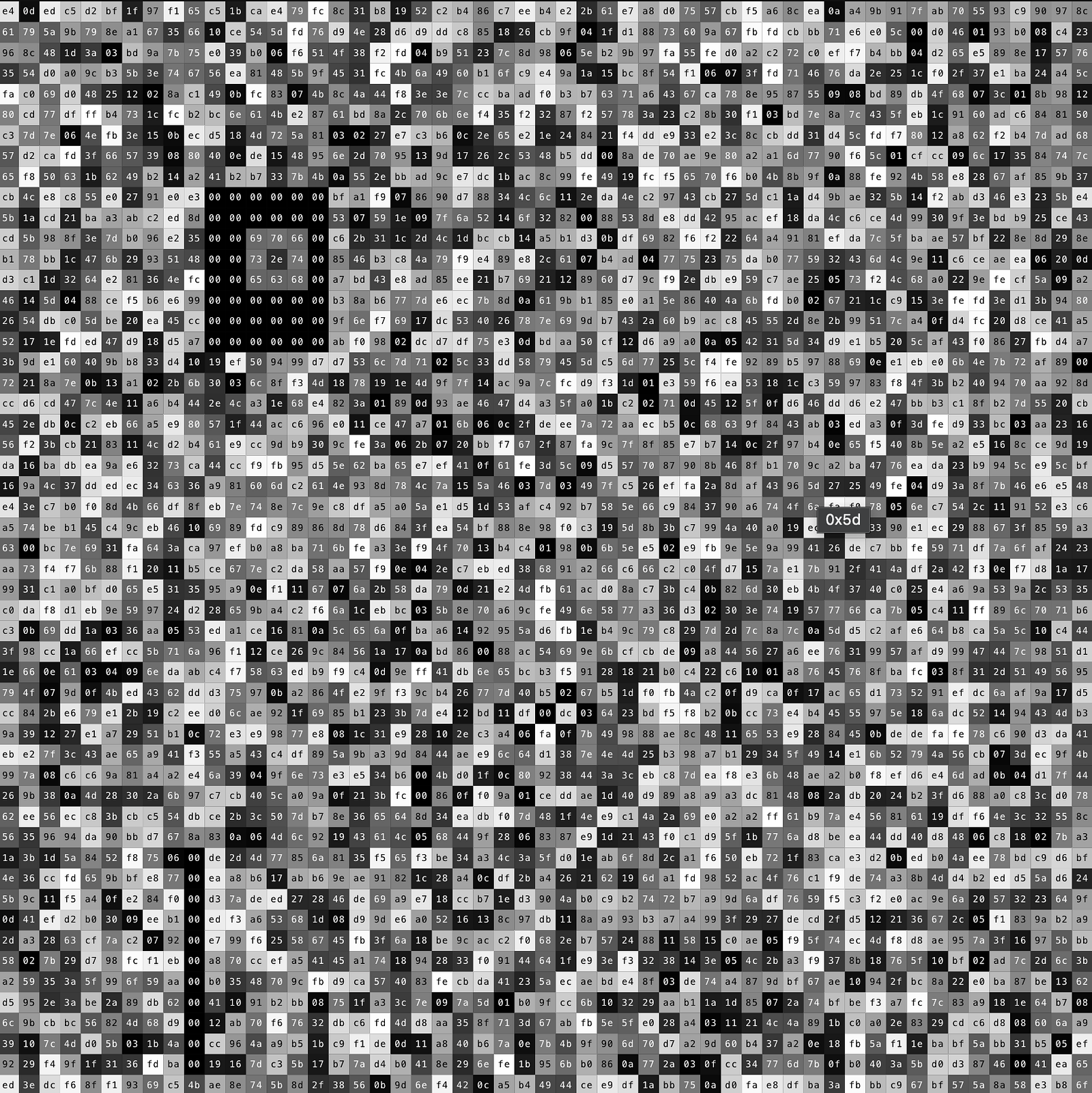
Consider Rifts by hashrunner released fall 2025. The project uses the bytes of contract code as a material. On Etherscan, when visiting the code of an unverified contract, we see a wall of bytecode that represents the contract’s underlying definition. On hashrunner’s Rifts contracts you can navigate to that contract’s code. Adjusting the window you can view the artwork in Etherscan itself as raw bytecode⁵:
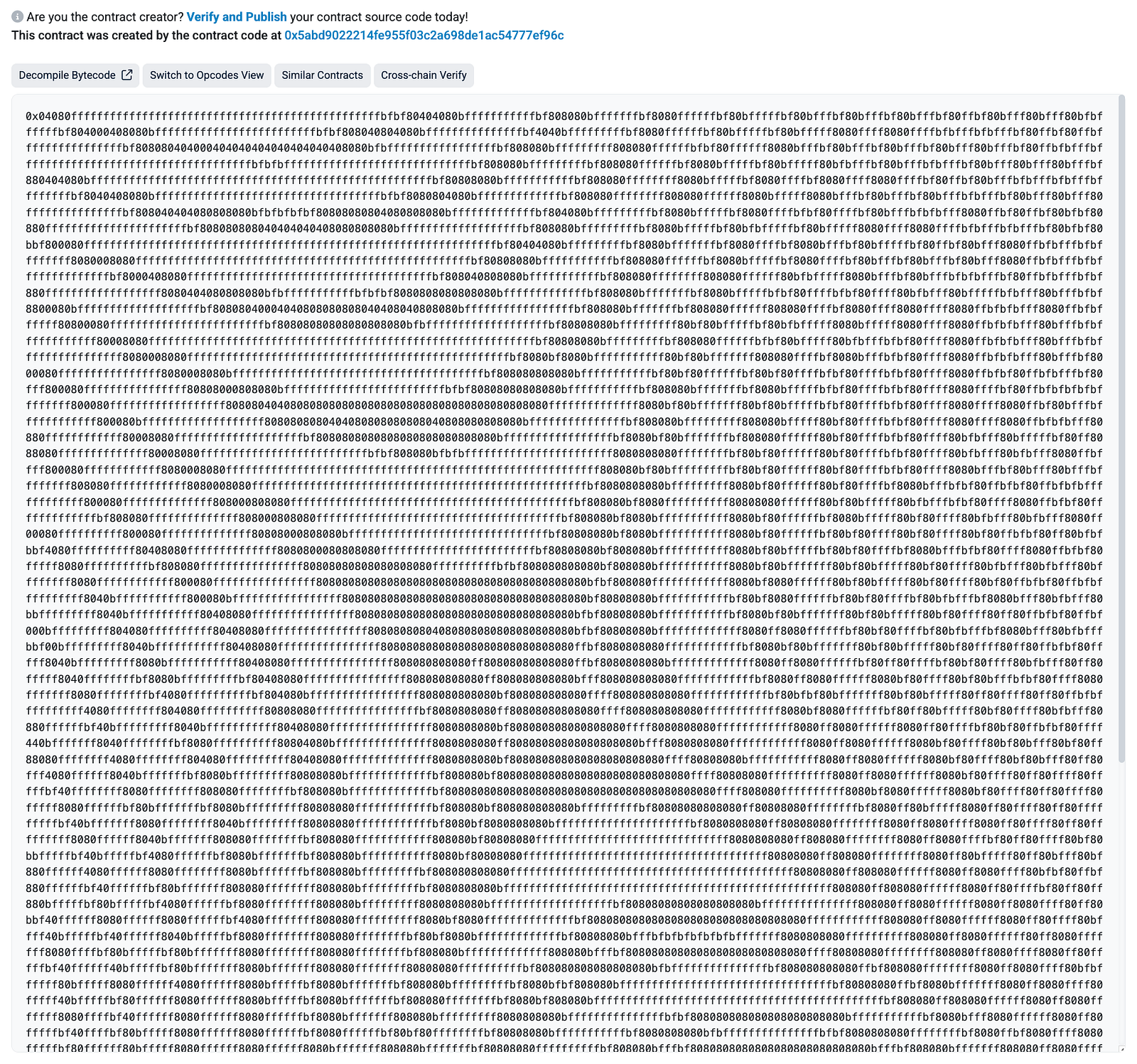
Rifts “transforms EVM bytecode into a canvas.” It provokes the viewer to think of the Ethereum’s computational definitions as a mesmerizing pattern. Each Rifts artwork is a mysterious and unknown underlying compute.
Alive on chain
In just the past couple of months, there have been many more examples of this creativity. There are too many for one small newsletter post. A list might include diid’s Oh Beautiful, marka’s provocative CH / RT, Ethereans, SuperRare’s Liquid Editions which use ERC-20 tokens as a creative primitive, Optimized Trajectory, Talismans, DEL, Fluxeto, Automate Attention, O(1), and more.
With the limited space here, I cannot summarize each. Instead, I chose a few to highlight below: To Be a Machine, Normies, and The Vessel.
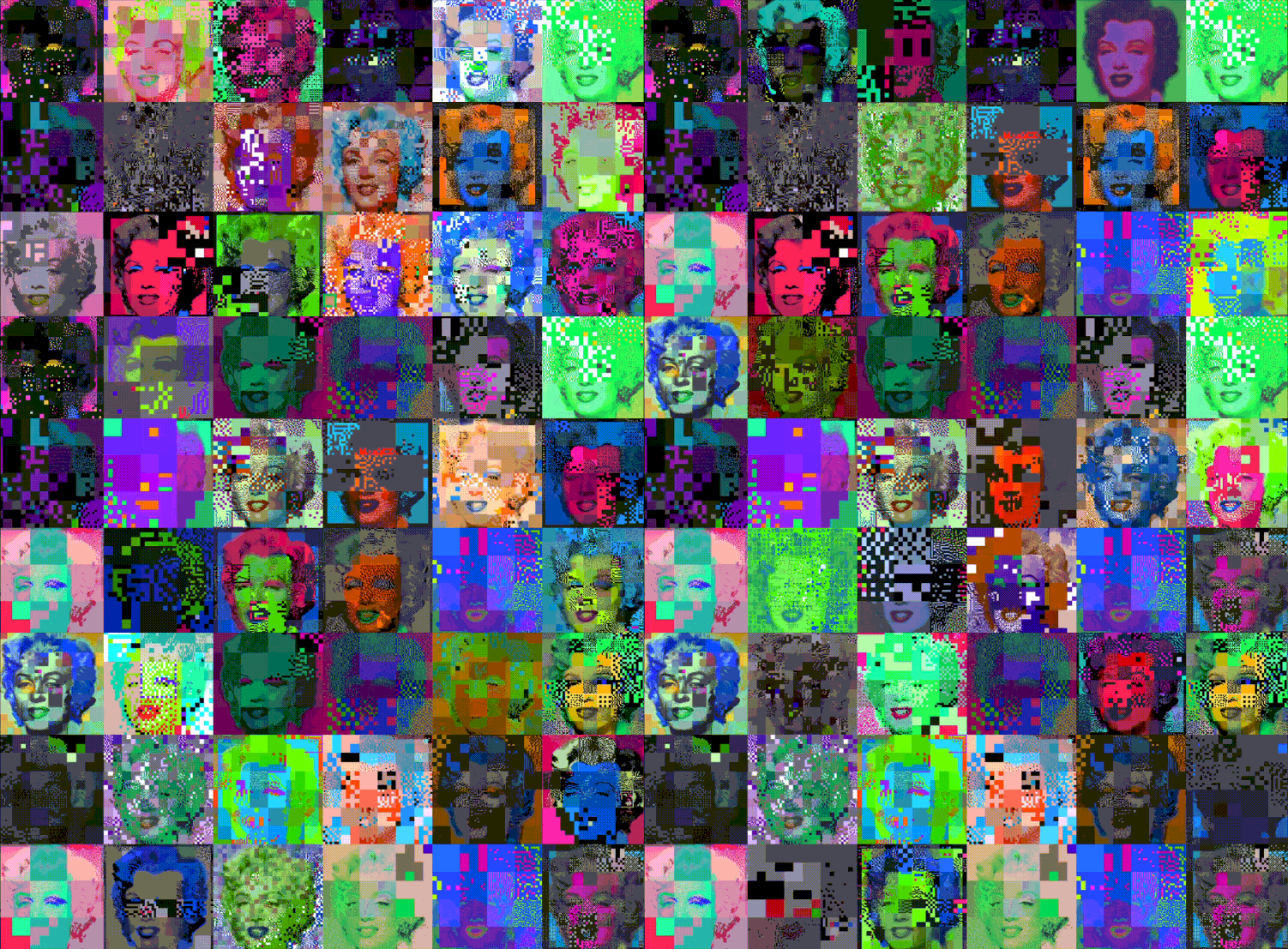
ripe’s To Be a Machine (Feb. 2026). Artist ripe’s TBAM takes its title from Warhol’s proclamation: “I want to be a machine.” Each NFT begins as a “screen test”: its parameters are fixed but every new block reconfigures the visual. The visual ripe chooses is, naturally, Warhol’s Marilyns.
A collector can watch their frame vary from block to block and can settle a frame at a time of their choosing thus freezing it on chain. Each frame gets, as ripe puts it, “12 seconds of fame,” the post-Merge block time. The world computer can emulate Warhol’s hoped-for factory and TBAM draws from Ethereum’s clocked compute.
Infinite machine. The expressive medium is everlasting computation producing evermore variety. It ceases only through collectors intervening on autonomous machine-like progression.
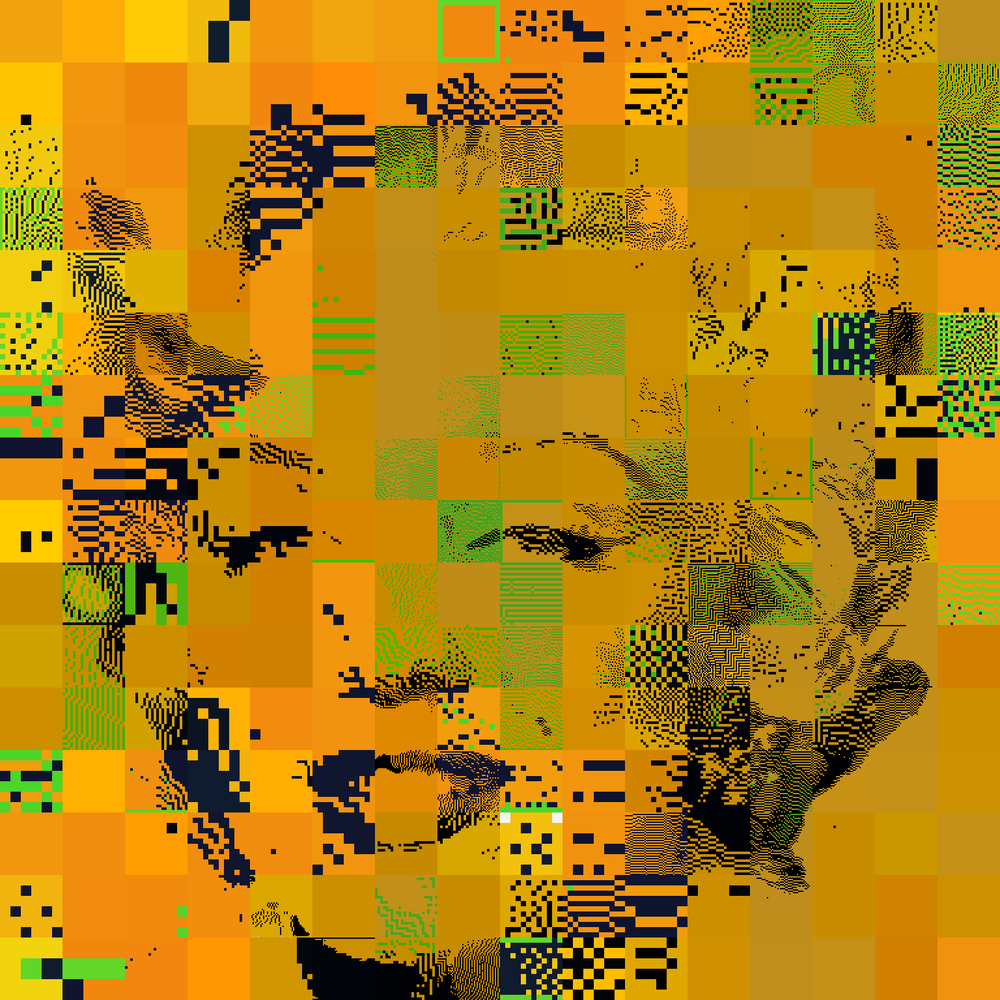
Normies by serc and Yigit Duman (Feb. 2026). Each Normie is a 40×40 monochrome face, 1,600 pixels in about 200 bytes and stored on the contract. The collection is CC0, so the pixels are a shared building block: anyone can read, compose, or extend them. The canvas contract makes this literal. A holder can burn any Normie to earn action points, spent as pixel edits on other Normies they hold. Each edit is written on chain as an overlay and the renderer combines modified layers. A Normie is never finished. It is a small, public, programmable surface that records its own history of revision.
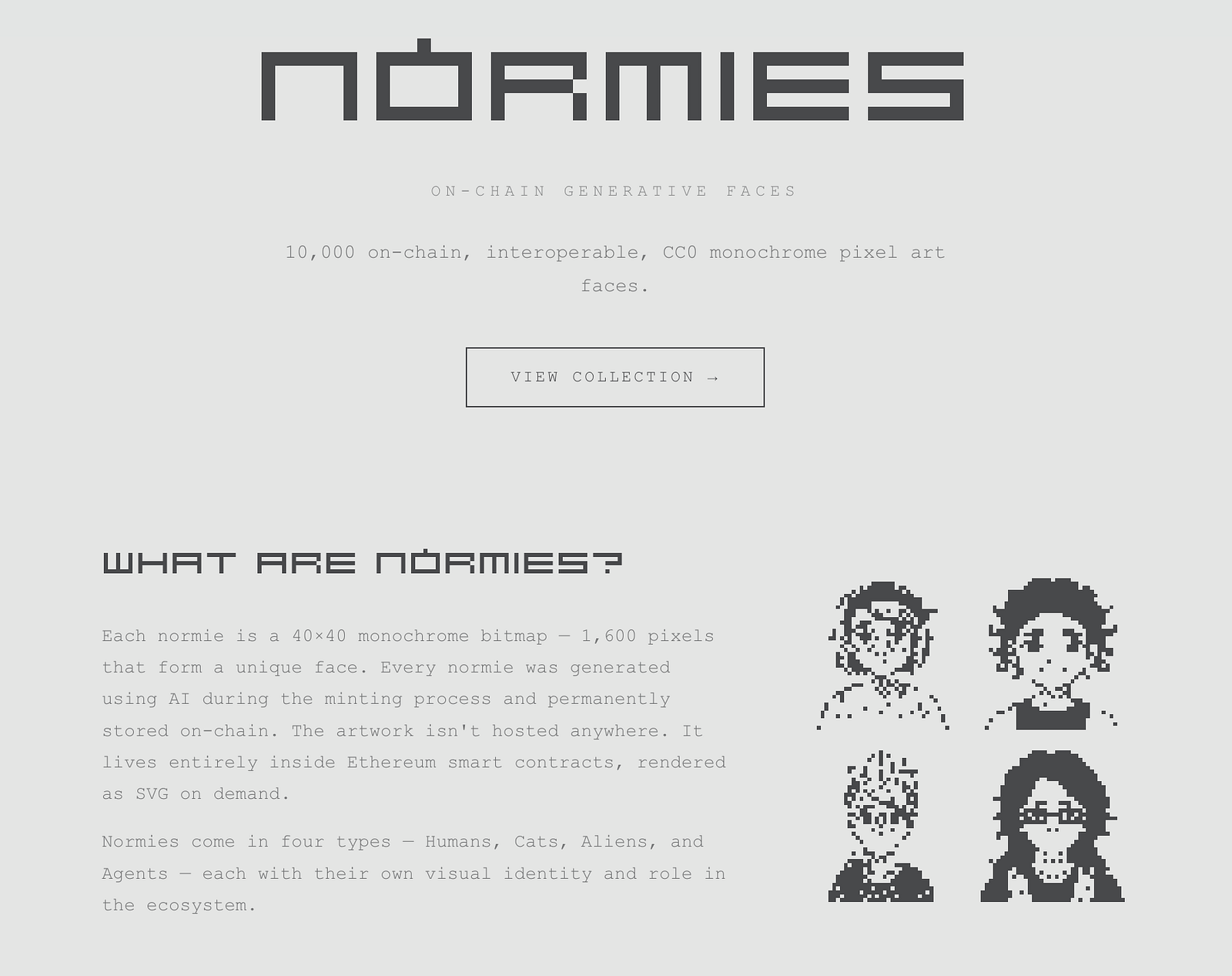
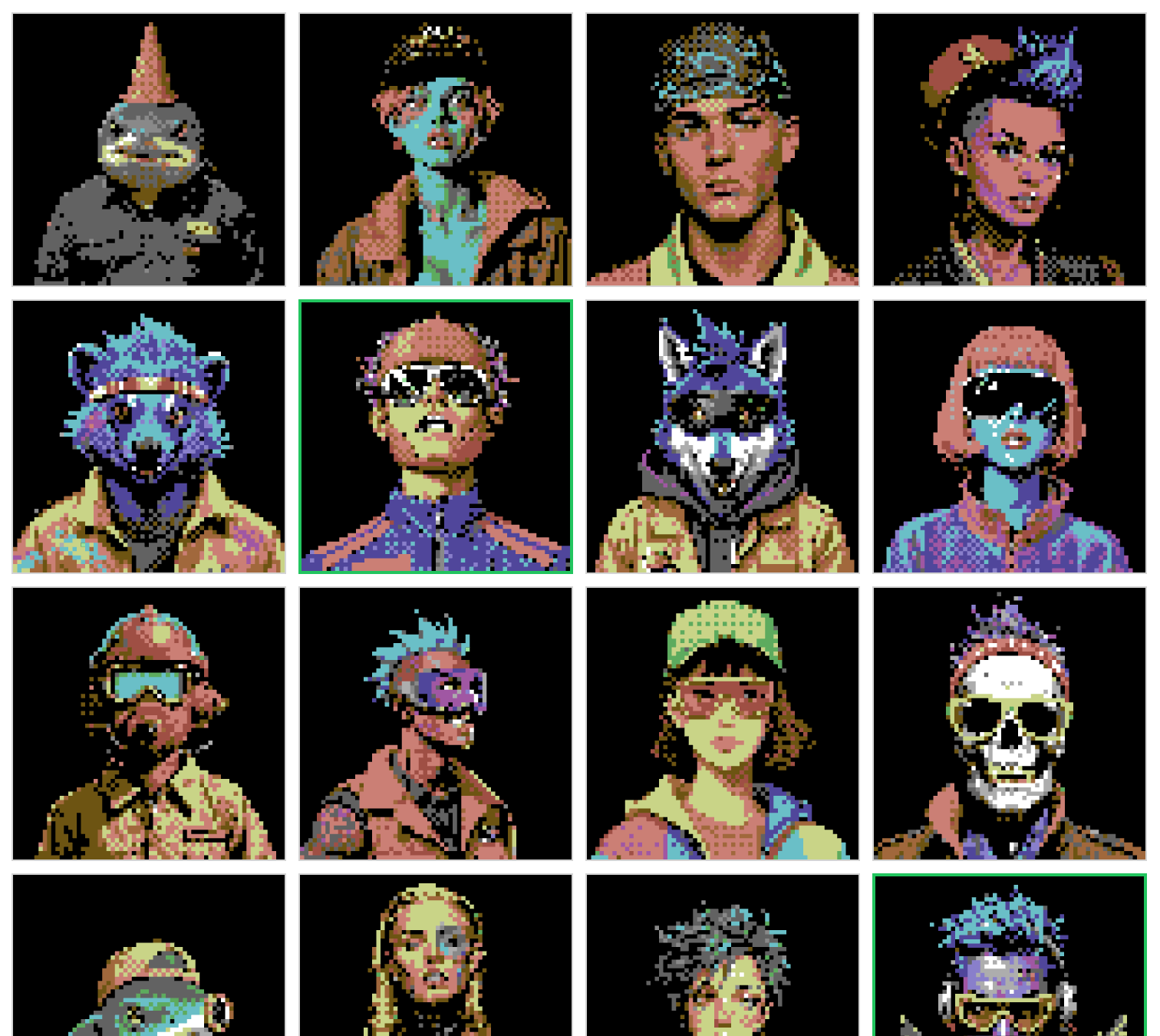
Normies, along side BOOA by Monas (Mar. 2026) on Shape, taps the emerging ERC-8004 standard for trustless agent identity — an on-chain passport that makes AI agents discoverable across chains. These artists arrived independently in early 2026 at the same intuition: a “PFP” is only the surface; it can be an economic actor, community resource, modifiable on-chain identity.⁶
Connected identities. Identity is not fixed, its memory and community are not in stasis. They are modifiable and distributable.
The Vessel (Feb. 2026) by Stephen and dav. The Vessel is less a single artwork than a programmable memory system for on-chain culture. It is a 100×100 grid of 10,000 “crafts,” each a little vessel with a fixed byte capacity, from 1 byte to 10,000. Everything is encoded as raw hexadecimal and stored directly in the contract, with no external dependencies: text, images, or small programs all live as the same universal data.
Mint cost scales with size, so a craft’s capacity is objective and measurable while its contents remain subjective. This represents a deliberate tension between what blockchain culture treats as rare and what it treats as meaningful. The act of storing nothing becomes its own commentary.
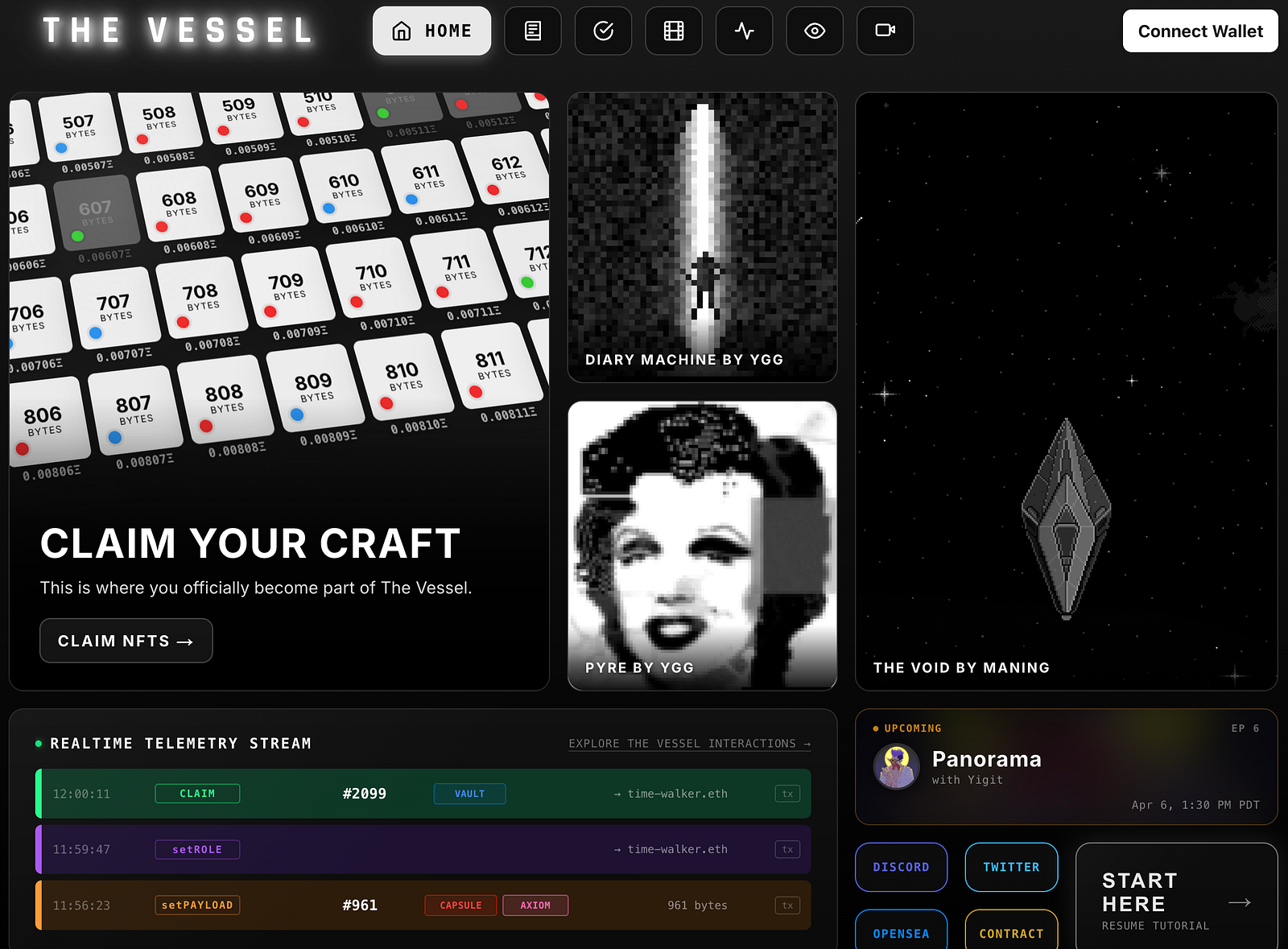
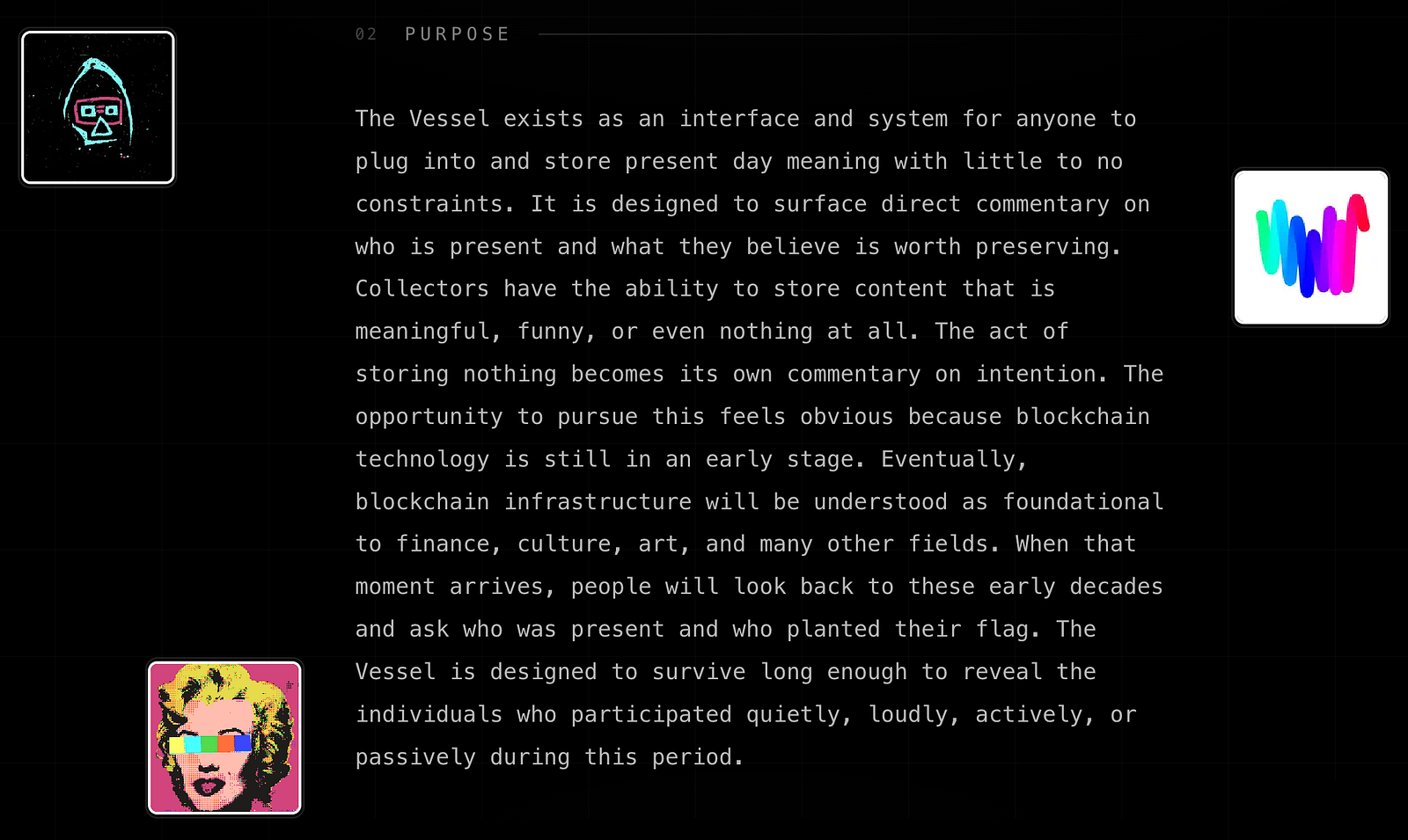
Crafts come in three kinds: capsules, vaults, and machines. Each has distinct properties. For example, machines allow their owners to route their behavior into bespoke contracts. This is the project’s most meaningful move: it is recursive. As Turing-completeness begets Turing-completeness, infrastructure potentiates further infrastructure, designed to last as long as Ethereum produces blocks. Owners on The Vessel have created time-extended diaries, crafts that display other crafts and more.
I myself have worked within The Vessel and tested its potential. Its fundamental reliance upon subjective choice has an open-world feel to it. Collectors are actors on the platform. They can summon ideas from blockchain history or build something new. For fun, I wrote a font library that allows my craft to iteratively display all the proposals on Ethereum’s original DAO project in 2016.
Permissionless compute. The chain’s recursive computation is a substrate; works call works. And communities can emerge and evolve through diverse group action on these layers of compute.
Conclusion
Even if one does not appreciate art — not everyone does — it is instructive to consider these creative explorations. “Cryptoart” like this can deepen our understanding of the blockchain on which these works are based. And if you do appreciate art, this technical understanding can, in turn, deepen appreciation of the art itself.
There is important precedent to these ideas. It is often remarked that the 1990s net.art movement treated the browser, the hyperlink, and the protocol stack as expressive material rather than mere delivery for images. This movement centered the network both as expressive medium and as the art.
Rhea calls out net.art in her Is Art from 2014:
Late 1960s Conceptual Art and mid 1990s net.art are useful inspiration for thinking about the blockchain and smart contracts. These art movements stood in critical tension with the systems of communication, law and commerce of their eras. Each treated rootless information, whether about sense data or network messages, as the critical subject of art and a new potential artworld. Their promise and their eventual recuperation by the existing artworld chimes with the historical experience of the blockchain.
The projects surveyed here resonate: the contract, the block, the bytecode, the token standard are not packaging for an artwork hosted elsewhere. They are the artwork, or at least an essential semantic component of it. TBAM’s medium is infinite clocked compute; Normies, a shared, modifiable pixel surface; The Vessel a recursive, permissionless infrastructure. You might be able to implement these ideas in other media, but blockchain surely facilitates it.
In a recent Verse podcast, Rhea Myers argues that today’s NFT concept originates from cryptoart. Those roots are still widening, strengthening a foundation whose upper structures have expanded far beyond their original “soil.” Blockchain-inspired projects are alive and evolving on chain into a complex and still growing ecosystem.
Disclosure and caveats
Takens Theorem is on X. He was not paid for this post and often owns some of the things he writes about. He does not engage in active selling or trading. Takens creates things too, read about it here.
End notes
- This inscription was to Len Sassaman, a prominent cypherpunk and cryptography researcher. Coincidentally, Sassaman and Hal Finney were just recently, and controversially, hypothesized to be the duo behind Bitcoin’s origins in a new documentary film.
- Naturally NFT collectors and creators quickly coordinated and helped each other find solutions to preserving the works hosted by Foundation. This included guidance from artist ripe who is highlighted in this post.
- Technology is not a passive vessel that merely houses human activities. Marshall McLuhan’s famous edict, “the medium is the message” highlights the structuring role of the technological context. The medium can both constrain and facilitate certain activities. McLuhan’s sociotechnical prophecies are often eerily precise.
- For more history, see Rhea’s book here.
- If your browser does not allow resizing of the bytecode textarea, try out the decompiler page on Etherscan.
- Normies and The Vessel and other recent projects have also illustrated how blockchain facilitates pervasive interoperability. Collectors are creating tooling and interfaces to work together and link up their efforts.

Still Have Questions?
Supported Explorers
 Abscan
  Apescan
  Aptoscan
  ArbiScan
  BaseScan
  Berascan
  Blastscan
  BscScan
  BTTCScan
  CeloScan
  Etherscan
  Fraxscan
  HyperEVMScan
  KatanaScan
  Lineascan
  Mantlescan
  MegaETH Etherscan
  MemeCoreScan
  MonadScan
  opBNB Explorer
  OP Mainnet Etherscan
  Plasmascan
  PolygonScan
  SeiScan
  SnowScan
  SonicScan
  StableScan
  Taikoscan
  Uniscan
  WorldScan
  XDCScan
  RobinScan
  ArcScan